


Russian Easter: Religious Observance, Traditions, and Festive Cooking
For millions of Russian Orthodox Christians, Easter (Pascha) is the most important holiday of the year. Rich with religious observance, ancient customs, and unforgettable foods, the celebration marks the resurrection of Christ and the joyful end to a 40 day Lenten period of reflection. From midnight church services to beautifully decorated eggs and towering sweet breads, Russian Orthodox Easter blends deep spirituality with warm family traditions and holiday cooking.
The Midnight Pascha Service

After a contemplative Lent mirroring Jesus’s time in the wilderness, Easter services begin just before midnight on Holy Saturday to celebrate the resurrection of Jesus Christ. Worshippers gather in dimmed churches holding candles, while priests chant ancient hymns in anticipation of Easter. At midnight, bells ring loudly and the clergy, choir, and congregation process around the church. When the doors reopen, the church is filled with light and joyful singing as the clergy proclaim the traditional Easter greeting:
Христос Воскресе! (“Christ is Risen!”) and the parishioners respond with Воистину Воскресе! (“Truly He is Risen!”)
This greeting replaces normal hellos among Orthodox believers for the entire Easter season, accompanied by three kisses on alternating cheeks, representing the Holy Trinity.
After observing weeks of strict fasting, traditionally avoiding meat, dairy, and eggs, families return home to break the fast with a festive meal once the Easter service ends.
The Traditional Easter Table
The Easter table is both symbolic and celebratory. Families often bring foods to be blessed at church before the midnight service on Holy Saturday. Three dishes are central to the celebration:
Kulich (Easter Bread)

Kulich is a tall, cylindrical sweet bread similar to but denser than a panettone or brioche. It is filled with butter, eggs, sugar, raisins, and sometimes candied fruit. After baking, it is often topped with white icing and decorated with colorful sprinkles or nuts. The tall shape symbolizes the resurrection and joy of Easter. Every family has its own version of the recipe that they carefully guard and even despite recipes, a successful kulich bake remains dependent on temperature and humidity. Results vary from year to year and many a prayer is cited for a succesful bake. We've provided just one of many unique kulich recipes at the end of the blog.
Paskha (Creamy Easter Dessert)

Paskha is a rich dessert made from farmer’s or baker’s cheese mixed with butter, cream, sugar, vanilla, and dried fruits. It is molded into a pyramid shape representing Christ’s tomb and for Russians, stamped with the letters “XB”, meaning Христос Воскресе (“Christ is Risen”). View a Paskha recipe below.
Red Easter Eggs

Eggs symbolize new life and the resurrection. Traditionally they are dyed bright red, representing Christ’s blood and the promise of life. A playful tradition involves tapping eggs together in a friendly contest to see whose egg shell remains unbroken.
The End of the Lenten Fast
Because Orthodox Lent lasts 40 days plus Holy Week, the traditional Easter meal contains many indulgent foods. Along with kulich, paskha, and eggs, festive tables often include:
Baked ham and paté
Meat pirog (pie)
Kielbasa and other sausages
Creamy salads like vinegret or potato
Pickled vegetables
Flavored vodka and wine
On Easter Sunday, following a joyful mid-day Easter service, families and friends either host open houses or travel from house to house. At each home, guests are treated to homemade food and raise toasts to celebrate the coming of Easter.
Decorating Eggs and Sharing Joy

Egg decorating is another cherished tradition throughout many Slavic cultures. While Russians often dye eggs red, other elaborate techniques exist across Eastern Europe, including wax-resist designs known as pisanky. Decorated eggs are given as gifts, used in games, or displayed as part of Easter decorations.
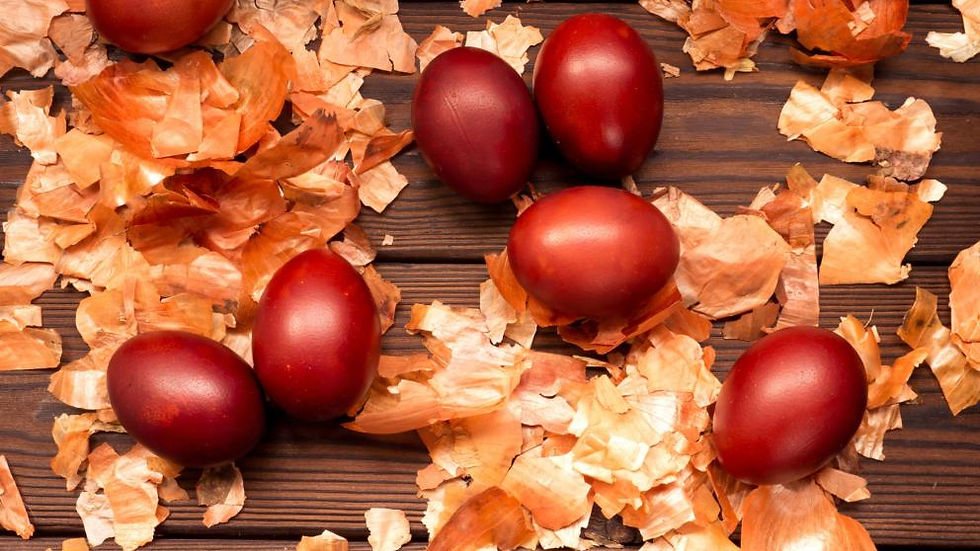
Natural dyes for Russian Easter eggs (krashenki) traditionally focus on red and brown hues using onion skins, with other plant-based ingredients for varied colors. Red/yellow onion skins are the most common, creating shades from orange to dark red-brown. Other natural dyes include beets (pink), spinach (green), and birch leaves.
A Celebration of Renewal
Russian Orthodox Easter is a profound celebration of renewal, faith, and community. After weeks of quiet reflection and fasting, the bright services and holiday food reflects the joy of the resurrection.
Whether through the fragrant sweetness of freshly baked kulich, the creamy richness of paskha, or the simple cracking of red eggs among friends, Pascha traditions continue to bring families together and connect generations to centuries-old customs.
Authentic Recipes
Enjoy making the traditional Russian Easter desserts with the recipes provided below.
Kulich
Kulich is traditionally baked in cylindrical molds and topped with icing and sprinkles. Many cooks bake their kulichi in large coffee or tin cans lined with brown paper or paper molds. Search for “kulich mold” to purchase tin cans or paper molds online. Kulichi can be made several weeks ahead of time and frozen after careful wrapping.
Ingredients
1 cup warm milk
2 ¼ tsp active dry yeast
½ cup sugar
4 cups all-purpose flour
3 eggs + 2 egg yolks
½ cup unsalted butter, melted
1 tsp vanilla extract
½ tsp salt
¾ cup raisins, candied fruit or almonds (if desired)
Zest of 1 lemon
Icing
1 cup powdered sugar
1–2 tbsp milk or lemon juice
Instructions
Activate yeast: Mix warm milk, yeast, and 1 tbsp sugar. Let sit for 10 minutes until foamy.
Mix dough: In a large bowl combine eggs, remaining sugar, melted butter, vanilla, and salt. Stir in yeast mixture.
Add flour gradually until a soft dough forms.
Knead about 8–10 minutes until smooth and elastic.
Mix in raisins and lemon zest.
Cover and let rise in a warm place 1½–2 hours until doubled.
Place dough into tall greased molds or tins, filling halfway.
Let rise again 30–40 minutes.
Bake at 350°F (175°C) for 35–40 minutes.
Cool completely, drizzle with icing, and decorate with sprinkles.
Paskha
Paskha is a rich dessert made with farmer’s cheese and dried fruit, molded into a pyramid shape symbolizing Christ’s tomb. Search for “Russian Easter molds” to purchase the pyramid molds online. Paskha may be made several days ahead and frozen until needed.
Ingredients
3 lbs farmer’s or baker’s cheese, drained (available at local Russian markets)
1½ lbs. unsalted butter, softened
8 raw egg yolks
8 oz. whipping cream
3½ cups sugar
Vanilla scraped from 5 sticks plus 1 tsp vanilla extract
½ cup raisins, ¼ cup chopped candied orange peel, or almonds (if desired)
Instructions
Beat butter and sugar until creamy.
Add egg yolks and continue beating.
Slowly mix in the cheese in parts; mix until smooth and thick.
Lightly whip the whipping cream separately.
Gently fold the whipped cream into the cheese mixture.
Stir in raisins, candied fruit or nuts if desired.
Line a pyramid mold (or small colander) with cheesecloth. Fill with the mixture and fold cloth over the top.
Place a small weight on top and refrigerate 12–24 hours to drain and set.
Unmold onto a plate and decorate with nuts or dried fruit.
Paskha may be made several days ahead and frozen until needed.


